Storm & Roof Leak Water Damage in Inglewood, CA
Winter storms drive rain under flat and low-slope roofs into the attic and ceilings. The restoration technicians tarp the roof, dry the structure, and stop the water before it spreads through your Inglewood home.
(310) 742-9441Tap the 24/7 Inglewood dispatch line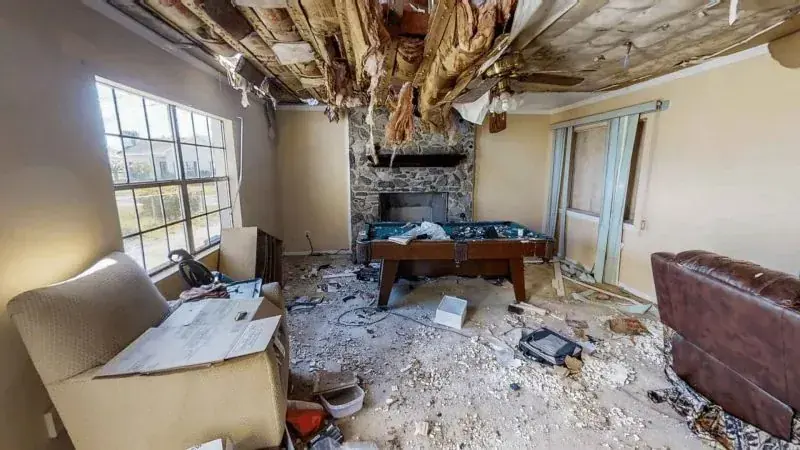
Why Inglewood trusts the pros with storm & roof leak water damage
Rapid local response
The response team answers 24/7, and the nearest crew heads out the moment the call comes in, day or night, across Inglewood and the South Bay.
IICRC S500 drying standard
Trained crews dry to a verified standard with meters and thermal imaging, not a mop and a fan.
Claim-ready documentation
The loss is documented with photos and daily moisture readings, the paperwork an adjuster needs to move a claim.
Inglewood water experts
Older copper, flat roofs, storm-drain flooding, and slab leaks, so the local pros know how water moves in a coastal-basin home.
What to do for storm & roof leak water damage in Inglewood
Contain the drip
Put down buckets, move furniture and electronics clear, and if a ceiling is bulging with trapped water, keep everyone from under it and let a technician relieve it safely.
Protect the room
Photograph the stain and any dripping for your claim, and pull rugs and belongings away from the wet area so they do not soak.
Call for a tarp and dry-out
Phone the 24/7 line. A restoration team rolls to tarp the roof and start drying, so the storm does not keep feeding the leak.
What does storm & roof leak water damage cost in Inglewood, CA?
In Inglewood, CA, storm and roof leak water damage typically runs $1,500 to $9,000, set by how much of the attic, insulation, and ceiling got wet, and whether the roof needs an emergency tarp before drying.
Minor, contained
- One area, caught early
- Extraction and drying
- Clean, Category 1 water
Typical storm & roof leak water damage
- Several rooms or hidden spread
- Extraction, drying, and minor rebuild
- Documented for your carrier
Extensive
- Heavy saturation or contamination
- Full mitigation and rebuild
- Category 2 or 3 water
Want a number for your home? Try the Water Damage Cost Calculator, then call for an exact, on-site scope.
How storm & roof leak water damage is handled in Inglewood
Call and dispatch
The response team answers 24/7, and the nearest Inglewood crew heads out with pumps, air movers, and moisture meters.
On-site assessment
The crew finds the source and the full reach of the water, including what soaked into slab, subfloor, and wall cavities.
Extract and dry
The extraction crew pulls the standing water, then runs air movers and dehumidifiers to a verified dry standard, not just the surface.
Verify and document
Moisture readings are logged until the structure is dry, then the loss is documented with the photos and daily readings an adjuster needs to move a claim.
Inglewood is full of flat and low-slope roofs, and a hard winter storm is exactly what finds their weak points. Wind-driven rain pushes under the membrane, the tar and gravel, and the flashing, then runs into the attic and down through the ceilings. Caught early it is a contained dry-out. Left overnight it soaks insulation, drywall, and framing across a room. The restoration technicians tarp the roof, dry the structure, and document the storm loss for your claim.
How storm water gets into an Inglewood roof
The coastal-basin storm pattern targets the roofs most common here:
- Flat and low-slope roofs pond water when drains and scuppers clog
- Wind-driven rain is forced sideways under membrane seams and flashing
- Older tar-and-gravel roofs crack and let water through at the seams
- Parapet walls and roof penetrations open up and leak at the joints
A leak that shows on the ceiling from above is roof-driven, which is a different source from an interior ceiling leak fed by a pipe or an upstairs unit.
The storm and roof leak response
Because rain keeps coming, the restoration team moves fast and in order:
- Tarp the roof section or the failed area to stop more water getting in
- Open the wet ceiling at controlled points to release trapped water
- Extract water from the attic, insulation, and rooms below
- Dry the framing, drywall, and cavities to a verified reading
- Document the storm loss and coordinate the permanent roof repair
Once the structure is dry, wet insulation and drooping drywall are replaced, and heavy saturation moves into full structural drying.
Rain coming through your ceiling right now? Put a bucket down, move what you can, and call. A local crew heads out to tarp and dry it.
Call (310) 742-9441Stopping the next storm leak
Most storm leaks are preventable with a little pre-season attention, and the restoration crews are glad to point homeowners in the right direction.
- Clear roof drains, scuppers, and gutters before the winter rains
- Reseal flashing, seams, and parapet joints on a flat or low-slope roof
- Watch for early ceiling stains and act on them before the next storm
The National Weather Service in Los Angeles issues the storm and atmospheric-river outlooks worth watching, and drying follows the standards published by the IICRC.
Do not wait for the stain to grow
A small brown ring on the ceiling during a storm means water is already in the drywall and probably the insulation above it. Calling at the first stain keeps the repair to one area instead of a whole ceiling.
From central Inglewood across the whole city
Inglewood water damage pros respond across every Inglewood ZIP, day or night.
Inglewood water damage pros cover the whole city, day or night, with rapid local response from Downtown to the neighboring South Bay.
Coverage runs across Inglewood, Lennox, Hawthorne, Lawndale, Westchester, Ladera Heights, and the surrounding South Bay.
See every neighborhood and ZIP covered ›Related restoration services
Storm & Roof Leak Water Damage questions, answered
Water in your property right now?
Do not wait for the FAQ. An Inglewood restoration team is standing by 24/7.
(310) 742-9441 Call nowCan you tarp my roof in the middle of a storm?
Yes. Emergency tarping is the first thing the technicians do so more rain cannot get in while the crew dries what already did. The crew works safely with the weather, then coordinates your roofer for the permanent repair once the storm passes.
Is a roof leak different from a ceiling leak?
The source is different. A storm and roof leak comes from above through the roof and attic, while an interior ceiling leak is usually fed by a pipe, an appliance, or an upstairs unit. The crew traces it to be sure the right problem is fixed, and there is a separate ceiling leak page for the interior kind.
Will my insurance cover storm roof damage?
Sudden storm damage to the roof and the resulting interior water damage are usually covered by a California homeowners policy. The restoration team documents the storm event, the roof failure, and the drying for your carrier.
How long does a roof leak take to dry?
A contained ceiling and attic usually dry in 3 to 5 days, longer if the insulation and framing were heavily saturated. Crews monitor moisture daily and pull equipment only once the readings confirm it is dry.
Do you replace the wet drywall and insulation?
The crew removes and dries what can be saved and replaces what cannot, such as soaked insulation and drooping drywall. The goal is a fully dry structure documented for your claim before any rebuild.
Why do flat roofs leak so much in Inglewood?
Flat and low-slope roofs are common here and they pond water when drains clog, while wind-driven rain is forced under the membrane and flashing. That combination is why storm season brings so many roof leaks in this part of the LA basin.
An Inglewood restoration team is standing by
Water sitting means damage spreading. Call Prairie Ave DrySure and a local crew heads out across Inglewood and the South Bay, day or night.
(310) 742-9441Call now, day or night